


Prioritize Design, Avoid Distractions: A Guide
Updated: Aug 13
THE DESIGN FIX
Have you ever entered a space that felt quietly resolved? Then stepped into another, equally expensive, that felt unsettled? The difference is rarely cost. It is clarity of priorities.
Most homeowners focus on surface-level decisions. True refinement begins with the foundation.
When you understand priorities versus distractions, you shift your focus to layout over accessories. If the flow is unresolved, no material—marble, brass, or otherwise—will correct it. The foundation must be established before any detail is introduced.
Think of your home as a canvas. When overfilled, it loses definition. By removing visual noise and focusing on layout first, every element begins to serve a purpose. The result is a space that feels intentional, calm, and composed.

MASTERING PRIORITIES
vs
DISTRACTIONS
Identify core design elements and resolve them first. Eliminate distractions through restraint. Use layout to guide movement and visual direction.
Clarity in priorities results in spaces that feel both refined and functional.
Your first step in space planning is to get the layout right. The layout determines how people move through the room, how furniture interacts, and how the space functions overall. If you skip this step or treat it as an afterthought, you risk creating a room that feels cramped, awkward, or disconnected.
Layout design should always come first because function matters more than finishes. A beautiful material cannot fix a poor layout—marble countertops, for example, may look stunning, but if they interrupt traffic flow or feel out of place, they won’t improve how the space actually works. A well-planned layout creates natural flow and comfort, allowing you to move through a room with ease based on how you use it every day. It also establishes clear focal points, guiding the eye to what matters most and preventing the space from feeling cluttered or visually chaotic. When the layout is right, everything else falls into place effortlessly.
Measure your space carefully and create a scaled floor plan.
Identify key functions for the room (e.g., seating, dining, working).
Arrange furniture to support those functions without overcrowding.
Leave enough clearance for easy movement (at least 30 inches between pieces).
Test different configurations before committing.
HOW TO PLAN YOUR LAYOUT
By focusing on layout design first, you set a strong foundation for the rest of your design decisions.

Build Cohesion to Tell One Story
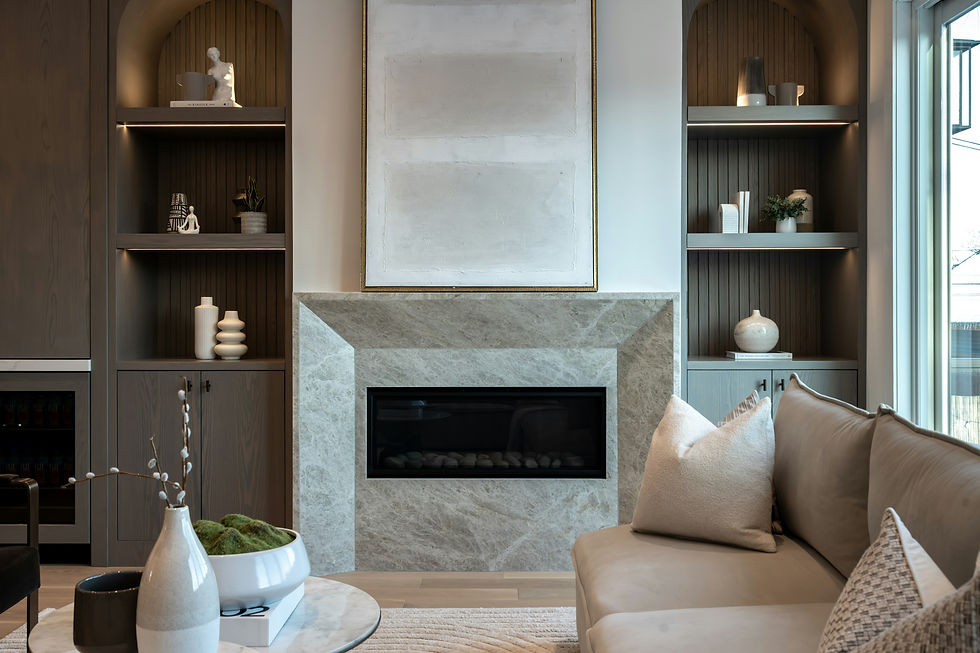
Once your layout is solid, the next priority is cohesive interior design. A space should feel like one story, not a collection of unrelated parts. This means your color palette, materials, and style should work together to create harmony.
Avoid Over-Styling
More decor doesn’t mean better design. Over-styling can clutter your space and confuse the eye. Instead, choose fewer pieces that complement each other and support the room’s purpose.
TIPS FOR CREATING COHESION
Pick a consistent color scheme with 2-3 main colors and a few accents.
Use similar materials or finishes throughout the space to tie areas together.
Repeat shapes or patterns subtly to create rhythm.
Balance textures to add interest without chaos.
For example, if you choose a modern interior design style with clean lines and minimalism, avoid mixing in overly ornate or traditional pieces. This keeps your design clear and focused.
Choose Quality Over Quantity
When it comes to furniture and decor, fewer pieces of better quality always win. This is a key design priority that separates luxury interiors from cluttered rooms.
Quality matters because durable materials not only last longer but also maintain their appearance over time. Well-made pieces tend to have better proportions and more thoughtful detailing, which contributes to a more refined overall look. Investing in quality also reduces the need for frequent replacements, saving both time and money in the long run. Most importantly, high-quality pieces act as anchors within a space, elevating the entire design and creating a more cohesive and polished environment.
Focus on essential furniture first: sofa, dining table, bed.
Choose timeless designs that won’t feel dated quickly.
Check construction details like joinery, fabric quality, and finishes.
Avoid impulse buys that don’t fit your overall design plan.
HOW TO SELECT QUALITY PIECES
By limiting your choices to a few standout items, you avoid the common design mistake of competing ideas. When everything tries to be a focal point, nothing truly stands out.
Layered Lighting Design Creates Atmosphere
Lighting is often overlooked or treated as a single overhead fixture. This kills the vibe and flattens your space. Instead, use layered lighting design to add depth and mood.
Layered lighting combines three types of light to create a balanced and functional space. Ambient lighting provides general illumination for the entire room, setting the overall tone. Task lighting offers focused light for specific activities like reading or cooking, improving usability. Accent lighting is used to highlight architectural features or decor, adding depth and visual interest to the space.
HOW TO APPLY LAYERED LIGHTING
Use dimmers to adjust light levels throughout the day.
Add table lamps or floor lamps for task lighting.
Install wall sconces or LED strips to accentuate textures or art.
Avoid relying on one overhead light that creates harsh shadows.
Layered lighting supports your functional design while enhancing the room’s style. It also helps you avoid the distraction of flat, uninspired lighting setups.

Avoid Common Interior Design Mistakes
Understanding priorities versus distractions helps you avoid common design pitfalls. Ignoring the layout and jumping straight into finishes often leads to a space that doesn’t function properly. Overloading with decor in an attempt to do more can quickly create clutter, while mixing too many styles confuses the eye and breaks cohesion.
Neglecting lighting by relying on a single source can make a room feel flat, and choosing quantity over quality reduces the overall impact of the design. By focusing on layout, cohesion, quality, and lighting, you create a strong foundation that supports every other design decision.
Set your priorities: Decide what matters most for your space (layout, cohesion, quality).
Measure and plan layout: Create a floor plan and arrange furniture for function and flow.
Choose a cohesive color palette and materials: Keep your style consistent.
Select quality furniture and decor: Invest in fewer, better pieces.
Design layered lighting: Combine ambient, task, and accent lights.
Edit and refine: Remove anything that doesn’t support your priorities.
HOW TO DESIGN A ROOM
STEP-BY-STEP
This approach helps you avoid distractions and common design mistakes, making your home feel intentional and inviting.
Mastering Priorities vs. Distractions
Good design is a matter of discipline. It requires clarity between what matters and what does not.
Establish Your Foundation Through Layout
Avoid the Trap of Superficial Finishes
Create a Unified Narrative with Cohesion
Resist the Urge for Over-Styling
Invest in Quality Over Quantity
Eliminate Competing Focal Points
Master the Art of Layered Lighting
Execute Your Design Strategy
Refined spaces are built on clarity, not excess. By prioritizing layout, function, and cohesion, you create an environment that feels composed and enduring. Design is not only visual, it is experiential, shaping how a space feels as much as how it looks. When distractions are removed, what remains is a space that feels both elevated and complete.

FAQ
How do I begin designing a room without feeling overwhelmed?
Start with layout. Define how the space functions, then introduce furniture. Details come last.
What common mistakes should be avoided?
Over-coordination, multiple focal points, and neglecting layered lighting often diminish a space.
How can cohesion be achieved on a budget?
Maintain a consistent palette and repeat materials. Simplicity creates cohesion without excess cost.
Why is the distinction between styling and design important?
Design establishes structure. Styling refines it. Prioritizing correctly ensures lasting results.
What approach works best for smaller spaces?
Focus on fewer, high-quality pieces. Maintain openness and clarity.
How does a structured workflow help?
It ensures decisions are made in sequence—layout, lighting, then styling—without oversight.
What keywords help when searching for layout inspiration?
Ergonomic space planning, open-concept layout design, functional small-space design.

Comments